
Table of Contents
Introduction
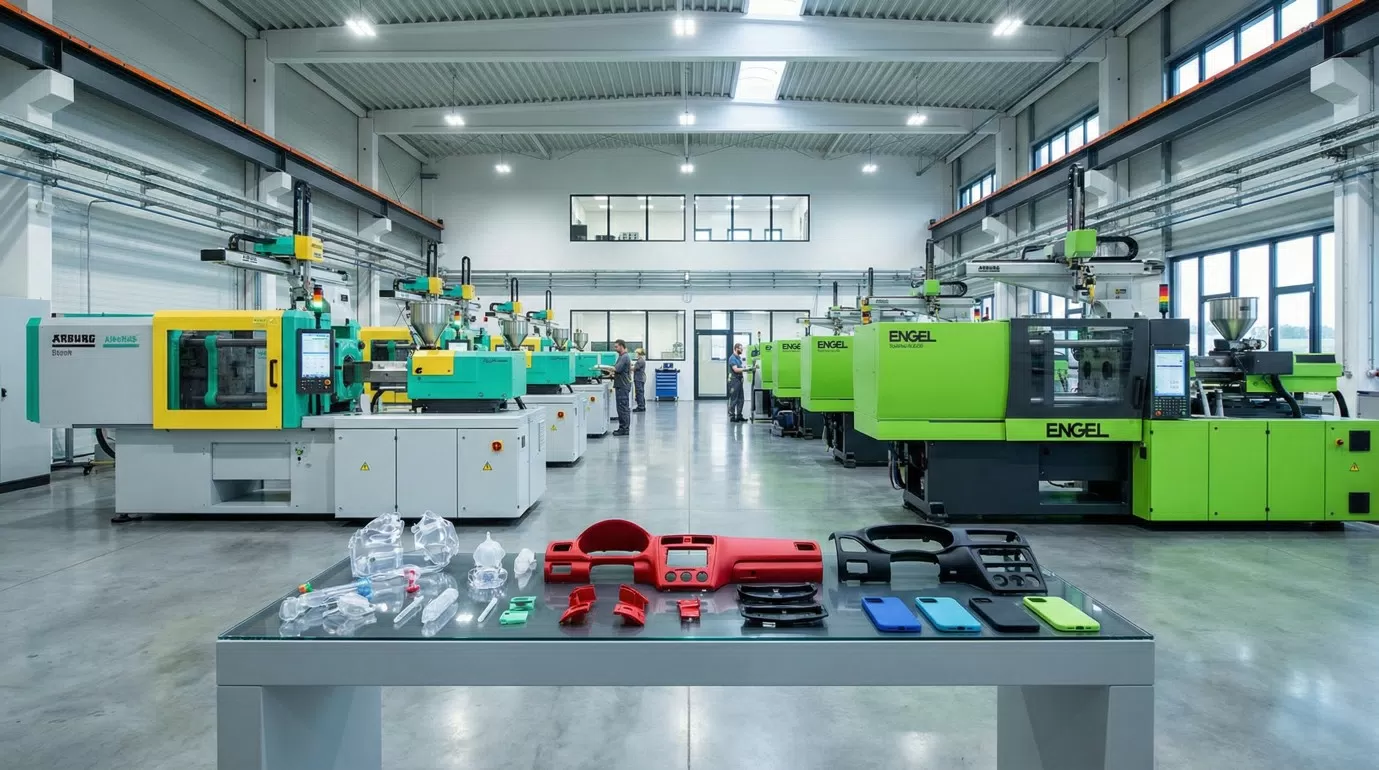
When exploring the world of manufacturing, plastic injection molding is a term that stands at the forefront. But what exactly is it? At its core, plastic injection molding is a sophisticated manufacturing process used to produce parts by injecting molten material into a precision-engineered mold.
From the intricate medical devices saving lives to robust automotive components and simple household goods, this versatile technique is responsible for a vast array of everyday items. Understanding this process is crucial for product designers, engineers, and entrepreneurs alike, as it offers unparalleled precision, efficiency, and cost-effectiveness for mass production.
What is Plastic Injection Molding? Understanding the Basics
The fundamental principle of this process lies in its ability to transform raw plastic pellets into highly complex, finished products with remarkable consistency. Manufacturers favor injection molding because it balances speed with technical prowess, making it the cornerstone of industries ranging from consumer electronics to aerospace.
Why is it so pervasive?
- Scalability: It allows for the production of millions of identical parts.
- Precision: It achieves high levels of detail and tight tolerances.
- Material Variety: It works with a wide range of thermoplastic and thermosetting polymers.
Key Components of an Injection Molding Machine
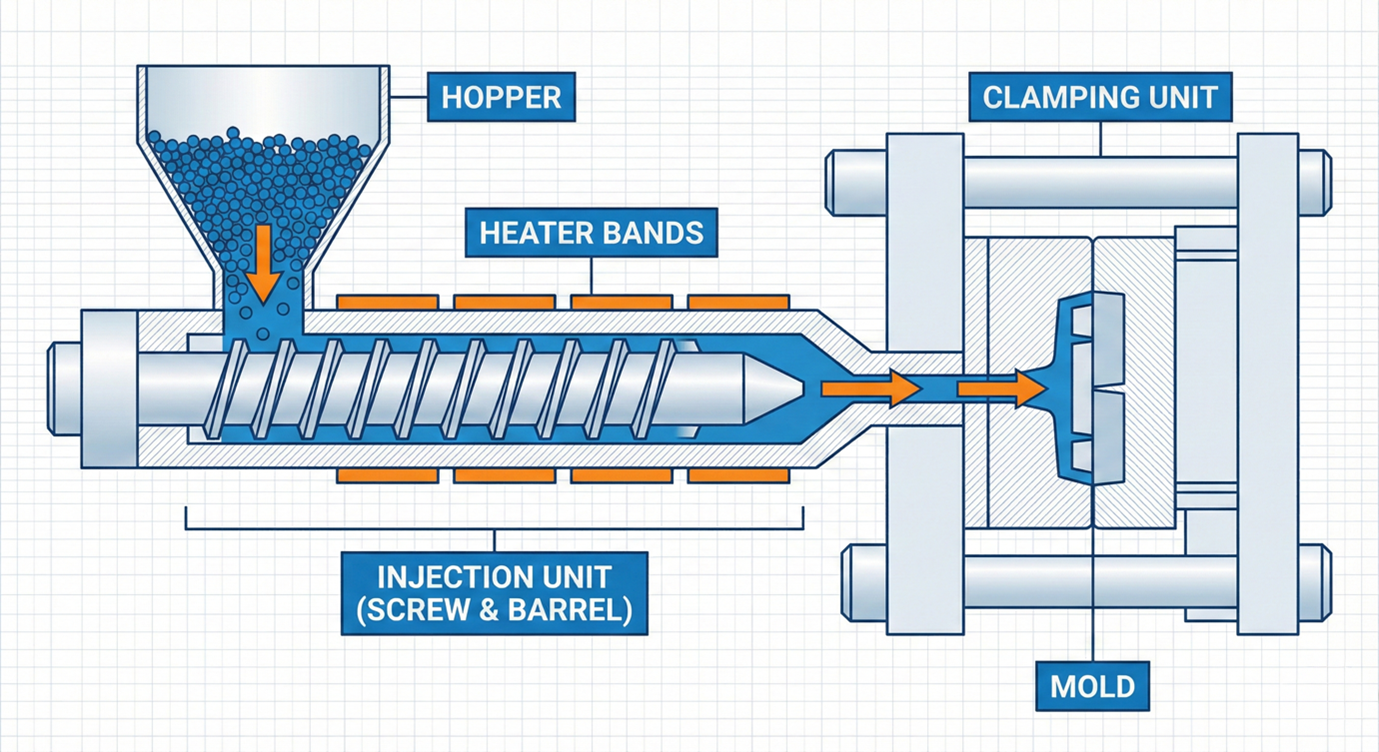
To understand the process, one must first understand the "injection press." An injection molding machine consists of three primary units:
1. The Clamping Unit
The clamping unit is responsible for holding the two halves of the mold together under immense pressure. This force is necessary to counteract the injection pressure, preventing the mold from opening and causing "flash" (excess plastic leaking out).
2. The Injection Unit
This is the "heart" of the machine. It includes a hopper for feeding plastic pellets, a heated barrel with a reciprocating screw, and a nozzle. The screw melts the plastic through rotary stirring and heat, then acts as a piston to force the molten material into the mold.
3. The Control Unit
The control unit is the brain of the operation. Its main function is to precisely manage and coordinate all production actions, including setting and controlling key parameters such as temperature, pressure, timing and speed. This ensures the accuracy, stability, and efficiency of processes such as plastic melting, injection, pressure holding, and cooling, thereby achieving consistent product dimensions and quality. Through a human-machine interface (HMI), operators can intuitively set and monitor parameters, ultimately achieving automated production.
The 5-Step Plastic Injection Molding Process
The journey from raw material to finished product can be broken down into five critical stages:
Step 1: Clamping – Securing the Mold
Before injection, the machine's powerful clamping unit closes the mold halves. The force required is calculated based on the part's projected area of the product and the in-mold pressure of the material to ensure the mold remains perfectly sealed.
Step 2: Injection – Melting and Filling
Raw plastic pellets are fed from the hopper into the heated barrel. As the screw rotates, it melts the plastic into a uniform consistency. Once ready, the screw rapidly pushes the molten plastic through the nozzle and into the mold cavity at high pressure.
Step 3: Dwelling (Packing and Holding)
Even after the mold is filled, pressure is maintained. This "holding pressure" ensures that more material is packed into the cavity to compensate for material shrinkage as the plastic begins to cool. This step prevents defects like sink marks or voids.
Step 4: Cooling – Solidifying the Part
The mold remains closed while a cooling system (usually involving water or oil channels) reduces the plastic's temperature. Cooling time is the longest part of the cycle and is critical for the part’s structural integrity and final shape.
Step 5: Ejection – Removing the Product
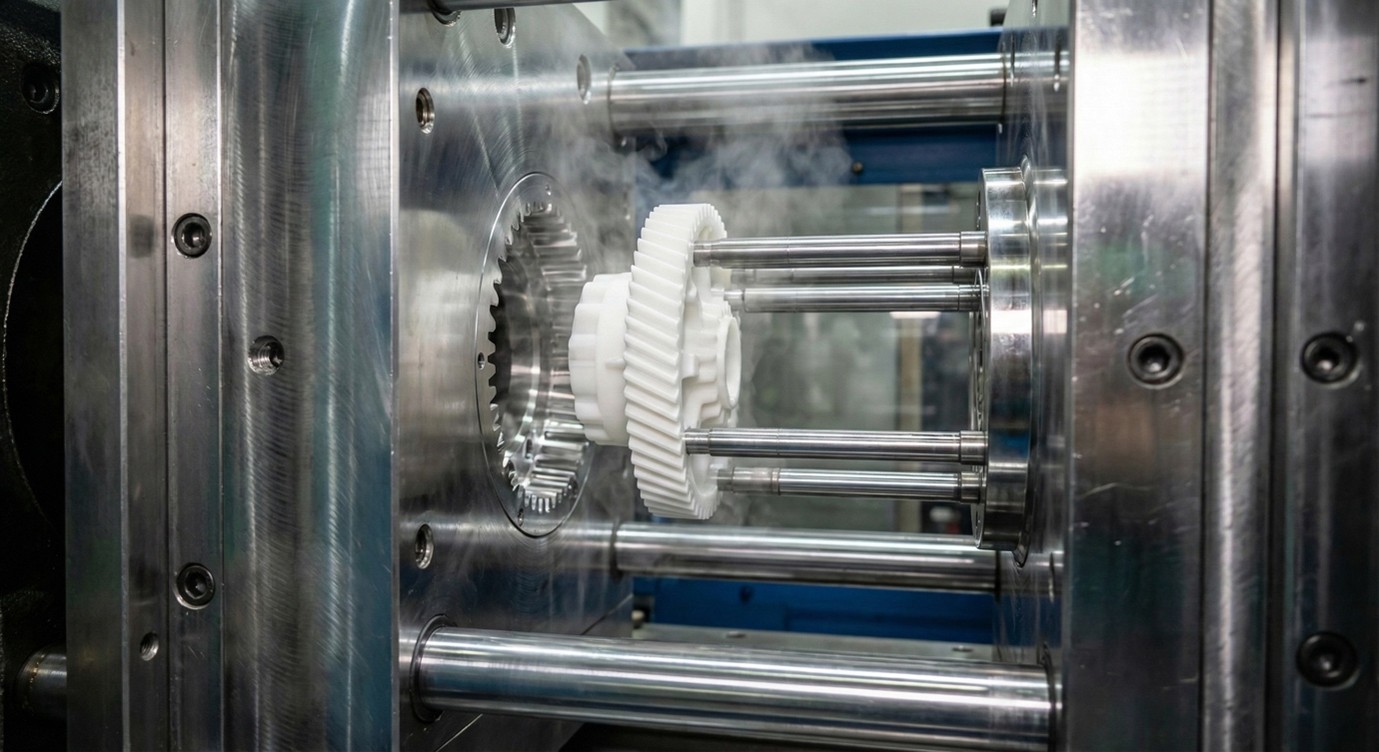
Once solidified, the mold opens, and a system of ejector pins pushes the part out. The part then falls into a collection bin, and the cycle repeats
Materials Used in Injection Molding
Choosing the right polymer is paramount, as material properties directly impact performance and cost.
Common Thermoplastics
- Polypropylene (PP): Known for chemical resistance and elasticity. Ideal for food containers and automotive parts.
- ABS (Acrylonitrile Butadiene Styrene): Offers strength, rigidity, and impact resistance. Used in LEGO bricks and electronic housings.
- Polycarbonate (PC): Prized for impact strength and optical clarity. Common in safety glasses and clear covers.
- Nylon (PA): High wear resistance and strength. Best for gears and bearings.
- Polyethylene (PE): Durable and low-cost, used for bottles and pipes.
Understanding Material Properties
Designers must consider mechanical (strength, stiffness), thermal (melting point), and chemical (corrosion resistance) properties. For example, medical-grade plastics require biocompatibility and the ability to withstand sterilization.
Designing for Success: Key Considerations
Successful injection molding starts with Design for Manufacturing (DFM).
- Uniform Wall Thickness: Inconsistent thickness leads to warping and sink marks.
- Generous Radii: Sharp corners create stress points; rounded corners improve material flow and part strength.
- Draft Angles: Tapering the sides of the part allows it to slide out of the mold easily during ejection.
- Gate Placement: The location where plastic enters the mold (the gate) affects cosmetic finish and structural integrity.
Applications Across Industries
The versatility of plastic injection molding allows it to serve nearly every sector:
- Automotive: Dashboard panels, bumpers, and door handles.
- Medical: Syringes, surgical instrument housings, and diagnostic equipment.
- Consumer Electronics: Smartphone cases, laptop frames, and remote controls.
- Packaging: Caps, closures, and thin-walled containers.
- Aerospace: Lightweight cabin interiors and ducting.
Conclusion
Plastic injection molding is an engineering marvel that defines modern industrial production. By combining precision, speed, and material versatility, it remains the go-to method for creating the high-quality plastic components we use every day.
Whether you are a beginner looking to understand the basics or an engineer optimizing a complex design, mastering the nuances of this process—from mold design to material selection—is the key to manufacturing success. As the field continues to evolve with sustainable materials and advanced automation, its impact on the global economy will only grow.