
Table of Contents
Introduction
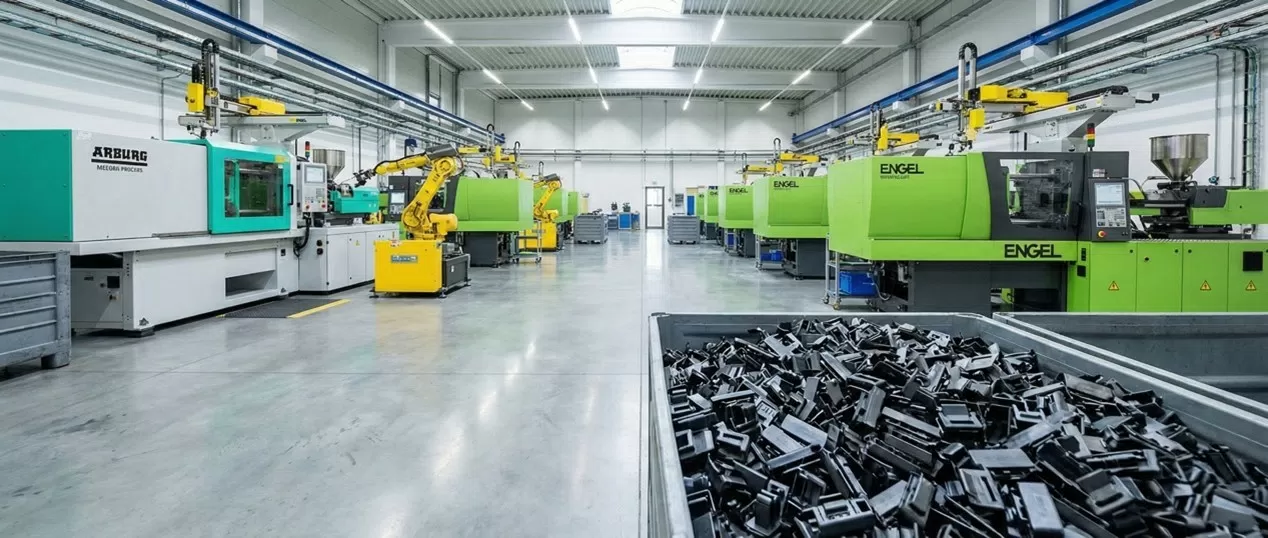
From intricate medical tools to robust automotive components, plastic injection molding is the invisible engine behind modern mass production. To remain competitive in today's manufacturing landscape, understanding how does injection molding work is essential. This high-efficiency process allows for the creation of complex, high-precision parts with minimal waste, turning raw polymer pellets into finished products in a matter of seconds.
Introduction to Plastic Injection Molding
Plastic injection molding is a versatile manufacturing technique used for both thermoplastics and thermosetting polymers. But how does injection molding work at a high level? Essentially, it is a cyclical process where molten material is forced into a precision-engineered mold, where it cools and takes the shape of the cavity. Its repeatability makes it the industry standard for sectors requiring tight tolerances and large-scale output.
What is Plastic Injection Molding? Understanding the Basics
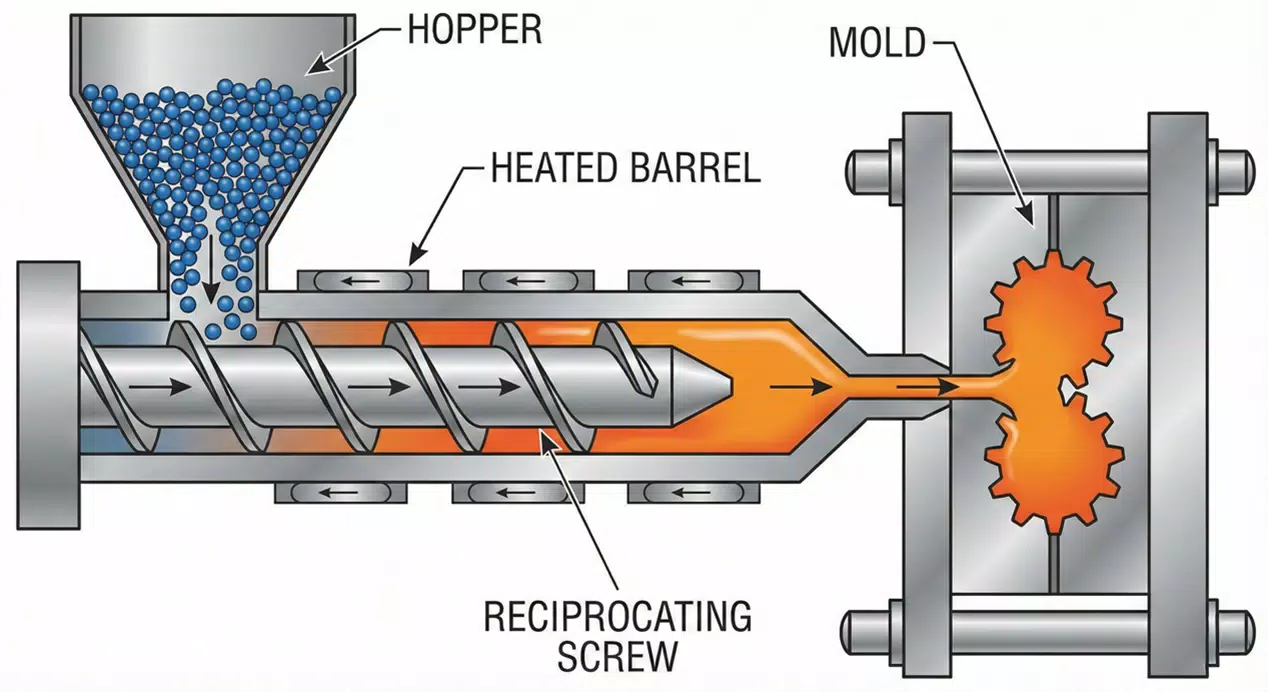
At its core, the process involves heating plastic granules until they reach a molten state and then injecting them under immense pressure into a metal mold. The magic happens within the heated barrel, where a reciprocating screw ensures the material is homogenized before the injection phase. This ensures that every part produced is an exact replica of the mold design.
Defining the Plastic Injection Molding Process
Beyond simple melting, this process is a science of heat transfer and fluid dynamics. It begins with material conditioning—ensuring resin is dry and ready—and ends with a solid part ready for assembly. Each cycle is a balance of temperature, pressure, and time, optimized to produce functional components from raw pellets.
Key Components of an Injection Molding Machine
To grasp how does injection molding work, one must understand the four primary systems:
- The Injection Unit: Comprised of the hopper, barrel, and screw; it prepares the molten "shot."
- The Clamping Unit: Uses hydraulic or electric force to keep the mold closed against high injection pressures.
- The Mold (Tooling): Custom-machined steel or aluminum blocks that define the part’s geometry.
- The Control System: The CNC interface that monitors and adjusts variables like injection speed and cooling time.
Why Use Plastic Injection Molding? Advantages and Disadvantages
The primary advantage is scalability. Once the mold is created, the cost per part drops significantly. It supports complex geometries that would be impossible with other methods. However, the disadvantage is the high initial cost of "tooling" (creating the mold), making it less ideal for very low-volume prototyping.
The Step-by-Step Plastic Injection Molding Process Explained
Understanding the granular details of the cycle is the best way to answer: how does injection molding work? Every second of the cycle counts toward the final quality.
Step 1: Clamping – Securing the Mold
The cycle begins with clamping. The two halves of the mold are pressed together by the clamping unit. The "clamping force" (measured in tonnage) must be high enough to prevent the mold from opening when the molten plastic is injected. Failure here results in flash (excess plastic on the edges).
Step 2: Injection – Melting and Filling
Molten plastic is pushed through the nozzle into the mold. This stage requires precise control of "injection speed" and "pressure." The goal is to fill the cavity quickly enough to prevent premature cooling but slowly enough to avoid material degradation.
Step 3: Dwelling (Packing and Holding)
After the mold is filled, pressure is maintained. This is called dwelling. Since plastic shrinks as it cools, the machine "packs" more material into the cavity to ensure the part reaches its full dimensions and avoids internal voids.
Step 4: Cooling – Solidifying the Part
The plastic must solidify before it can be removed. Water or oil circulates through cooling channels within the mold to dissipate heat. Cooling usually accounts for the majority of the total cycle time.
Step 5: Ejection – Removing the Finished Product
The mold opens, and ejector pins push the part out. The part then falls into a bin or is collected by a robot, and the cycle resets for the next injection.
Materials Used in Plastic Injection Molding
Material selection is the foundation of product performance. Most polymers fall into two categories: Thermoplastics (which can be re-melted) and Thermosets (which undergo a chemical change and cannot be re-melted).
Common Thermoplastics and Their Applications
- Polypropylene (PP): Excellent chemical resistance; used for bottle caps and automotive battery cases.
- ABS: High toughness and impact resistance; common in LEGO bricks and electronic housings.
- Polycarbonate (PC): Transparent and high-strength; used for safety lenses and medical components.
Understanding Material Properties for Product Design
When asking how does injection molding work for your specific part, consider material properties like Melt Flow Rate (MFR) and Shrinkage Rate. High MFR materials flow easier into thin walls, while knowing the shrinkage rate is vital for machining the mold to the correct size.
Designing for Plastic Injection Molding: Key Considerations
Good design reduces cycle time and prevents defects. A "Design for Manufacturing" (DFM) approach is essential.
Mold Design Principles for Success
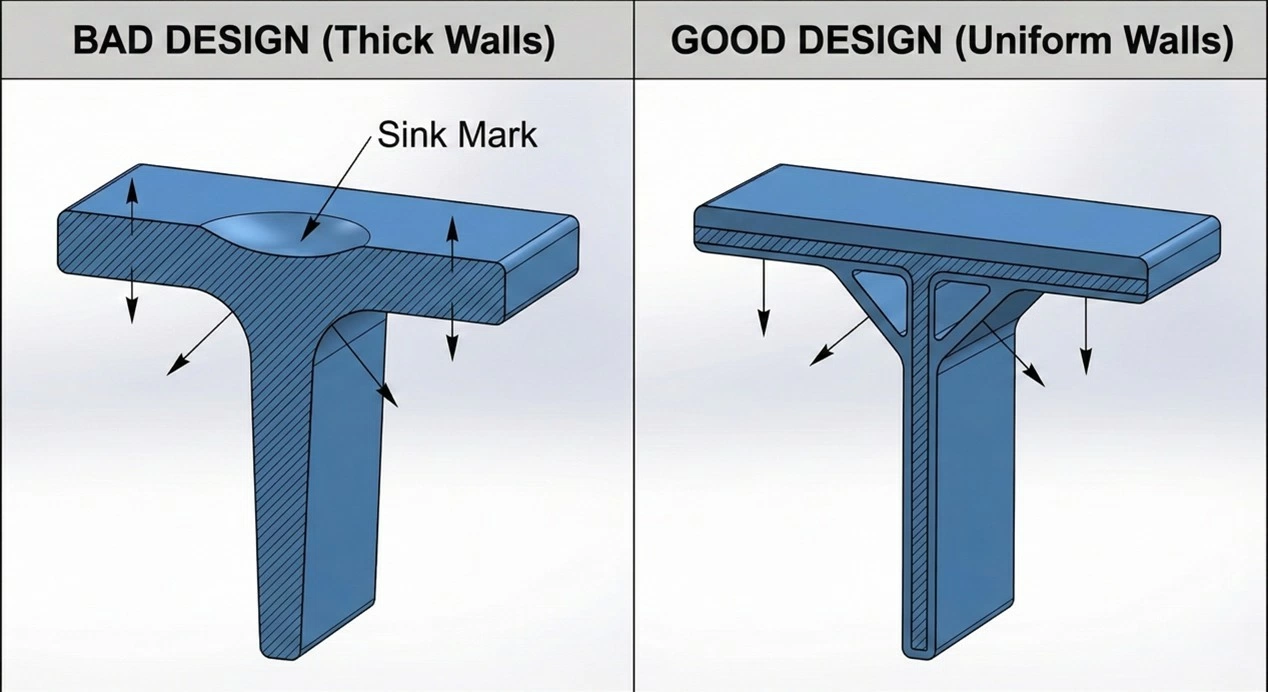
Successful molds incorporate Draft Angles (tapered sides) to allow easy ejection and Uniform Wall Thickness to ensure consistent cooling. If walls are too thick, you risk "sink marks" or warping.
Common Design Challenges and Solutions
- Warping: Caused by uneven cooling; solve by optimizing cooling channels or changing wall thickness.
- Sink Marks: Caused by thick sections; solve by using ribs instead of solid blocks.
- Voids: Trapped air or vacuum bubbles; solve by increasing holding pressure.
Applications of Plastic Injection Molding Across Industries
Because of its precision, this process is ubiquitous across high-stakes industries.
Consumer Goods and Electronics
From your smartphone's internal frame to the housing of your coffee maker, injection molding provides the aesthetic finish and structural integrity required for consumer electronics.
Automotive and Aerospace Components
Weight reduction is critical here. Injection molding allows manufacturers to replace heavy metal parts with high-performance, lightweight polymers that meet strict safety standards.
Medical Devices and Packaging
Precision is non-negotiable in healthcare. How does injection molding work in medical settings? It often involves "cleanroom" manufacturing to produce sterile, high-precision items like syringes, valves, and diagnostic kits.
Conclusion: Is Plastic Injection Molding Right for Your Product?
If you require high-volume production with consistent quality, the answer is likely yes. While the upfront investment in tooling is a factor, the long-term efficiency and low cost-per-part are unmatched. By understanding the stages and design principles, you can leverage this powerful technology to bring your product to market at scale.